
What is PSP?
The Pesticide Stewardship Partnership (PSP) is a voluntary, data-driven program that helps reduce pesticide impacts to Oregon waterways. The program combines local knowledge, water quality monitoring, education, and technical assistance to identify where pesticides are showing up in streams and support practical ways to reduce movement into surface water.
The Walla Walla Basin PSP is locally coordinated by the Walla Walla Basin Watershed Council in partnership with the Oregon Department of Agriculture, Oregon Department of Environmental Quality, OSU Extension, growers, landowners, pesticide users, and other local partners. Since 2005, the program has supported collaborative pesticide stewardship in the Walla Walla Basin.
Why it Matters in the Walla Walla Basin
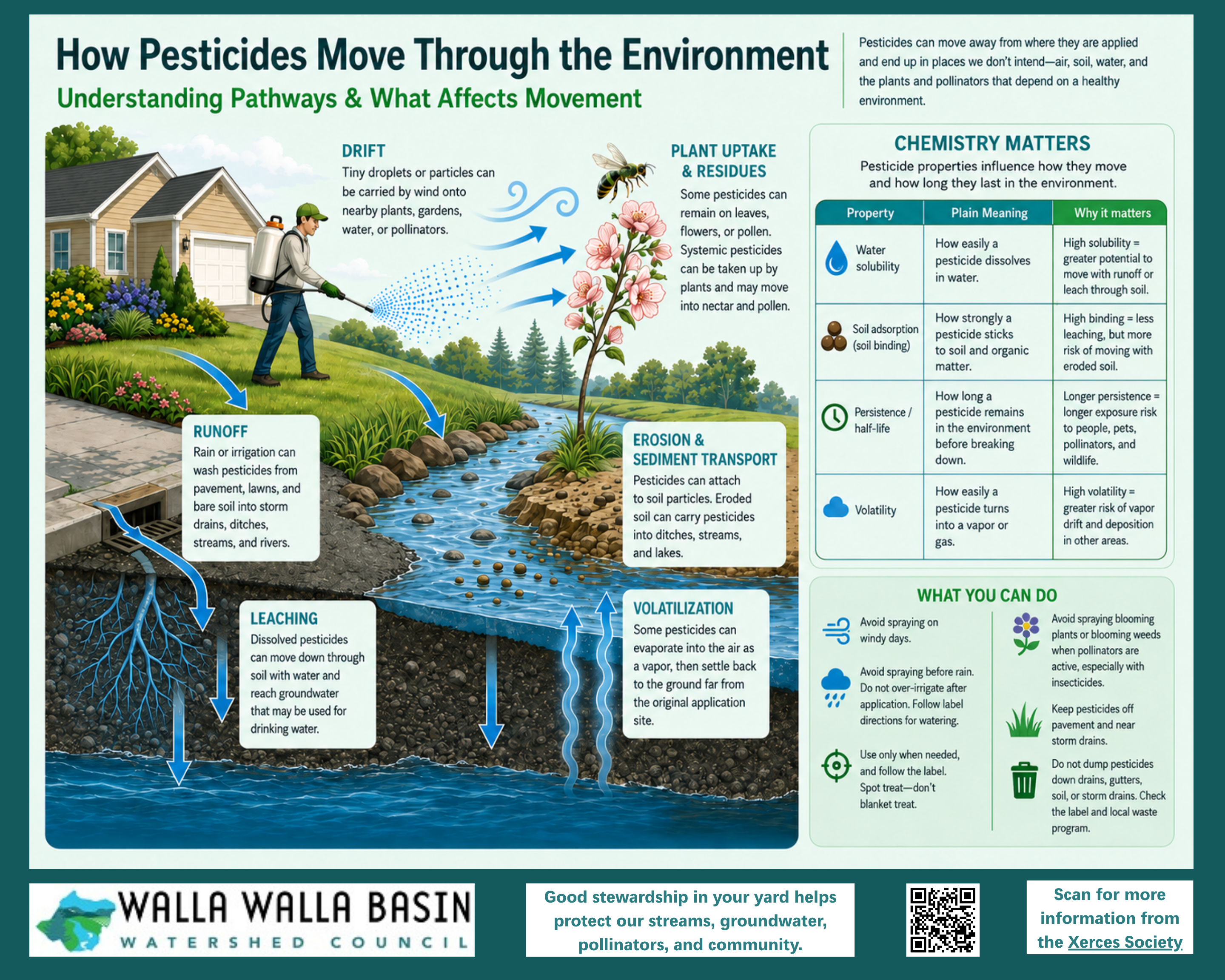
The Walla Walla Basin includes orchards, vineyards, dryland wheat, oilseeds, legumes, row crops, residential areas, roadsides, irrigation systems, and many streams. Pesticides can move from treated areas into surface water through runoff, drift, leaching, irrigation return flows, stormwater, and sediment movement.
This matters because local streams support aquatic life, downstream water users, agriculture, and ESA-listed Mid-Columbia summer steelhead. Pesticide use can overlap with sensitive fish life stages, including upstream migration, spawning, early development, and downstream smolt migration.
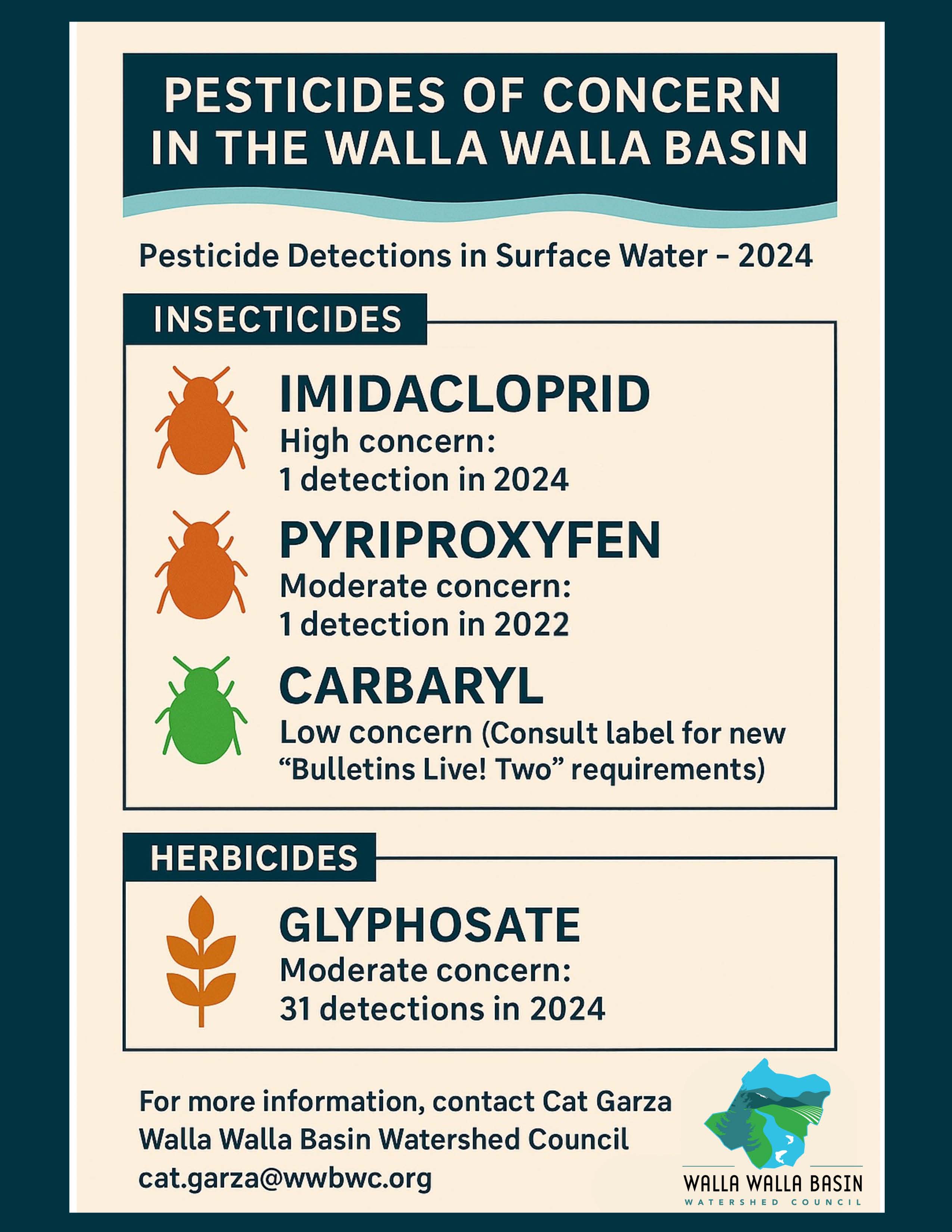
Pesticides of Concern
What the Data Show
Long-term monitoring shows progress. Some pesticides that were once detected more often have declined in recent years. These improvements likely reflect changes in regulations, product use, and local pesticide management practices.
Monitoring also shows why continued stewardship matters. As pesticide use changes, different products can appear in local streams. PSP data help identify which pesticides need attention, where detections are occurring, and what types of voluntary practices may help reduce movement into waterways.
WWBWC collects surface water samples at five monitoring sites on the Walla Walla River and Little Walla Walla River systems during the local pesticide use season, generally from March through October. Samples are analyzed by the Oregon Department of Environmental Quality laboratory following approved methods.
These results help WWBWC and local partners focus outreach, technical assistance, and best management practices where they can do the most good for water quality, aquatic life, farms, and the community.
How Pesticide Users Can Reduce Risk
Pesticide users can help protect water quality by reducing the chance that pesticides leave the target area. Practical strategies include:
- Follow the pesticide label and any applicable Endangered Species Protection Bulletins.
- Check Bulletins Live! Two before applying products with bulletin requirements as directed by the label.
- Avoid spraying before rain, high winds, irrigation runoff, or conditions that increase drift.
- Use Integrated Pest Management to confirm that treatment is needed before applying.
- Choose lower-risk products when they are effective and practical.
- Calibrate equipment and use application methods that reduce drift and overspray.
- Maintain buffers near ditches, streams, wetlands, wells, and storm drains.
- Prevent pesticide-contaminated sediment from moving off site.
- Properly store, mix, rinse, and dispose of pesticides and containers.
Resources and Downloads
Monitoring and reports
- Oregon Department of Agriculture's Pesticide Newsletter - Spring 2026
- Pesticide Stewardship Partnership Data Viewer
- 2023–2025 Walla Walla Basin PSP Final Report
- 2024 Walla Walla PSP Water Quality Monitoring Results PowerPoint Presentation - Dept. of Environmental Quality
- 2024 Walla Walla PSP Summary
Applicator tools
- EPA Bulletins Live! Two
- EPA Mitigation Menu
- ODA pesticide licensing and recertification
- ODA pesticide waste and disposal resources
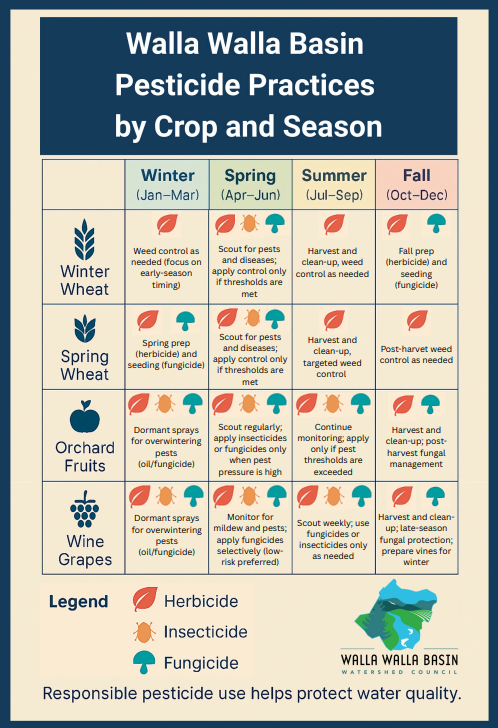
Local outreach materials
Events and Training
Need pesticide credits? Check the Oregon Department of Agriculture’s website for current in-person and online recertification opportunities in English and Spanish.
WWBWC also hosts local PSP meetings, workshops, and outreach events when funding and partner availability allow. These events focus on local monitoring results, pesticide stewardship, best management practices, and changing pesticide label requirements.
Applicator Survey
Are you a grower, landowner, pesticide applicator, landscaper, or other pesticide user in the Walla Walla Basin? Your feedback helps guide local outreach, technical assistance, and future workshops.
Walla Walla Basin Pesticide Best Management Practices (BMP) Survey

Thank you!
Stay Informed on Pesticide Use and Protection Measures
For the latest information on pesticide regulations and strategies to reduce environmental impacts, visit the Environmental Protection Agency's Mitigation Menu, it's a central hub with helpful links, tools, and guidance for growers and land managers.
Need help navigating the EPA’s Bulletins Live! Two system?
Download the guide below for step-by-step instructions on how to access area-specific pesticide use restrictions.
Download: EPA "Bulletins Live! Two" Guide